A compliance software launched to 65 medical facilities nationwide. Generated $650K in year one.
Here’s what I did to avoid a product not growing after launch before it happened.
You launched the product.
There is momentum. Some sales. Some sign ups. But something isn’t taking off the way you imagined.
So you do what most founders do. Add a feature. Fix the onboarding. Run a promotion. Update the roadmap.
Weeks pass. Then months.
The churn continues. The adoption stays flat. The infrastructure costs stack up. The runway shrinks. The team energized at launch starts to feel the weight of it.
And somewhere in the back of your mind a question starts forming.
The product works. But it’s not growing. What is going wrong?
There is a common and costly mistake I have seen founders make over and over again.
And it’s not what it seems.
The mistake hiding in plain sight
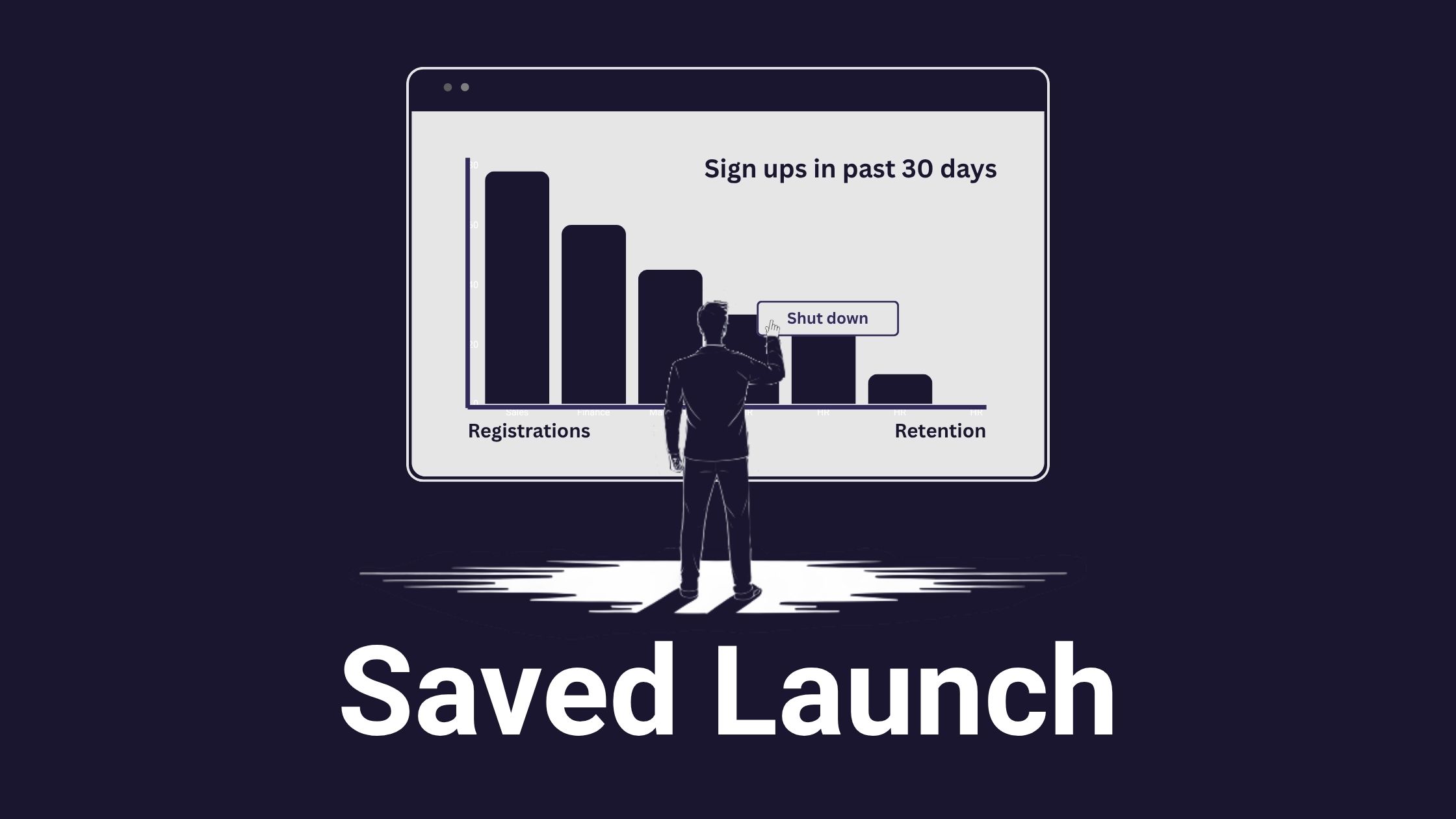
Silent launches. Flat retention. Users who sign up once and never come back.
Most founders blame the product. Wrong features. Bad timing. Too much competition.
But the real reason is simpler than that.
They built for their ICP. Not their target user.
These are two different people. And confusing them is one of the most expensive mistakes in product development.
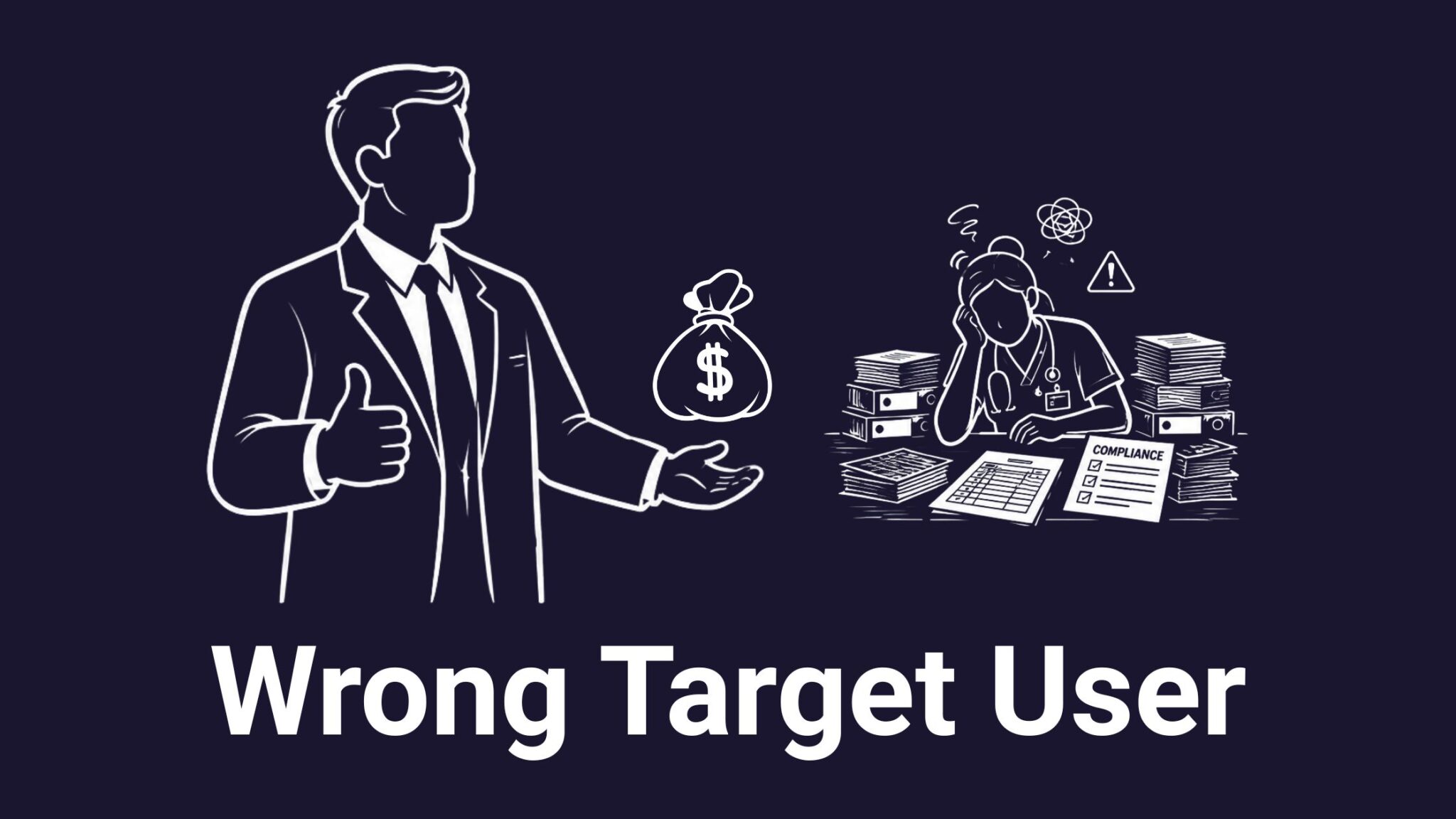
Your ICP has the budget and the final say. They sign off on the decision. They care about risk and protecting the business.
Your target user carries the daily pain. They open your product every morning. Their behavior has to change for the product to work. They come back because it makes their day easier. When it doesn’t, they stop using it, deem it pointless, and cancel.
The hardest part is that the product isn’t broken. It works. It solves the problem everyone agreed on.
But growth stagnates. And nobody can figure out why.
Build for the ICP and ignore the user. Adoption dies. Renewals dry up. Cancellations follow. No matter how many people signed off on it.
What this looks like in practice
Before Design Labs Consulting, a startup brought me in to build a medical product.
One ask. Get moving. Start building accounting software for medical facilities.
I ran research instead. Because something about the buyer felt wrong.
Everyone in the room focused on the medical director. He ran the facility. He controlled the budget. The obvious ICP and the obvious user.
As it turned out, that assumption was wrong.
Case studies showed the same pattern across facility types. Most medical facilities failed their first attempt at accreditation. Then hired an expensive consultant to fix the problem.
The person doing the real work every day was the director of nursing. She and her team tracked everything by hand. Spreadsheets. Binders. Mounds of manual reports.
Failing a compliance survey is not a setback. There is real risk at play. It means losing Medicare reimbursement. Losing the ability to operate. That consequence falls on the medical director. His facility. His liability.
But nobody had built anything for compliance.
It was the diamond in the rough that no one saw.
And that’s when I understood the real problem. The ICP and the user were not the same person. And this user had endless potential.
Same buyer. Different product. Built for the person who needed it enough to use it every day.
The product launched across 65 medical facilities in year one. Major medical supply companies began discussing white-labeling and licensing.
That is what happens when you find the person who cannot afford to go without your product.
The pattern shows up in almost every product that struggles to grow. And the reason is almost always the same.
Why this keeps happening
I have seen this pattern crop up over and over again.
The person with the budget has the biggest say. They are the ones holding the money. They can articulate the problem because they feel the business consequences.
It happens with subject matter experts. A loud voice in the room who lives the problem every day and has strong opinions about how to solve it. Investors who have expectations and want to see progress. Leadership teams that already decided what to build before anyone has walked in the door.
Everyone is eager to get moving fast. The energy in the room pulls toward building.
And in that rush, the user never gets asked a single question.
Still, nobody means for it to happen. The intention is always to build something people need. But the loudest voice in the room shapes the product. And the loudest voice is almost never the person who will use it every day.
So founders build for the person they can see. And the person who has to open the product every single day? Their problems remain untouched.
By the time that becomes visible, the product is already built. The infrastructure is expensive. The team stretched itself for launch. Every new feature built on the wrong foundation makes the problem harder to unwind.
It’s easy to say this is an onboarding problem. A UX problem. A feature problem. Fix this one thing and it will turn around.
But product market fit lives with the user. Not the buyer.
The buyer funds the build. But if the user doesn’t come back, share it, and defend it, you never find it. No matter how much runway you have left. And the longer it goes unseen, the more it costs.
The ones who catch it early share one thing in common. They were willing to let go of the original idea when the evidence pointed somewhere else.
This is hard to see from the inside
YouTube’s origin was not broadcasting. It started as a dating site. The founders sent a mass email asking people to post dating profiles.
Silence.
But they had the clarity to let go of the idea and focus on who mattered most. The user. What were people doing on the internet? What did they need? The answer was video sharing. Not dating. And that shift changed everything.
Most founders don’t get that clarity on their own. Not because they lack the intelligence or the drive. Because the people closest to a product carry a specific type of blindness. Every decision made from day one becomes a lens that filters what you can and cannot see.
The assumptions that shaped the product start to feel like facts. The brief feels settled. The roadmap feels logical. And the user who was never asked remains invisible.
Getting outside that requires more than fresh eyes. It requires pattern recognition built across many products and many industries.
It requires:
-
Knowing when the research points somewhere unexpected.
Knowing which role carries the real pain before anyone in the room has figured it out.
Knowing how to surface real problems without leading the conversation toward assumed ones.
That perspective doesn’t come from the inside.
That’s where Product Diagnosis starts. A structured outside look at who you built this for, whether that’s the right person, and what to do next.
The most expensive mistake isn’t building the wrong product.
It’s building for the wrong person.
And most founders don’t find out until after the launch.